
MONK LIFE PROJECT
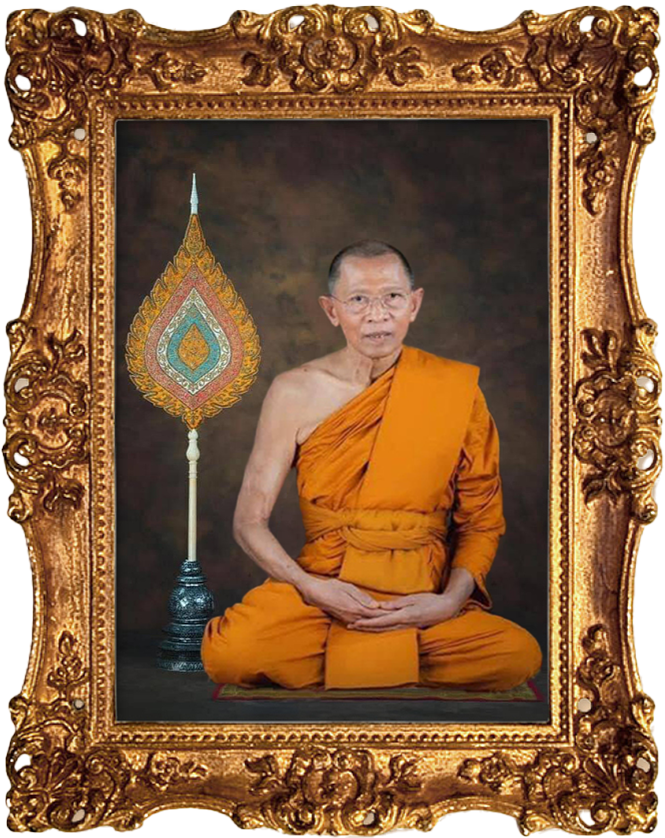
A Welcome Blessing
To those considering the Monk Life Project,
The Buddha taught: “Though one may conquer a thousand men in battle, yet he who conquers himself is the greatest victor.”
— Dhammapada
To live as a monk, even for a short time, is an opportunity to undertake this highest victory — the mastery of one’s own mind. Through discipline, silence, and sincere practice, clarity and strength naturally arise.
May all who enter this program cultivate self-mastery, wisdom, and inner peace, and may the stability you develop become a benefit to the world around you.
With blessings for your journey,
Phra Phrom Dilok (Udom Wachirayan)
Abbot of Wat Sam Phraya, Bangkok
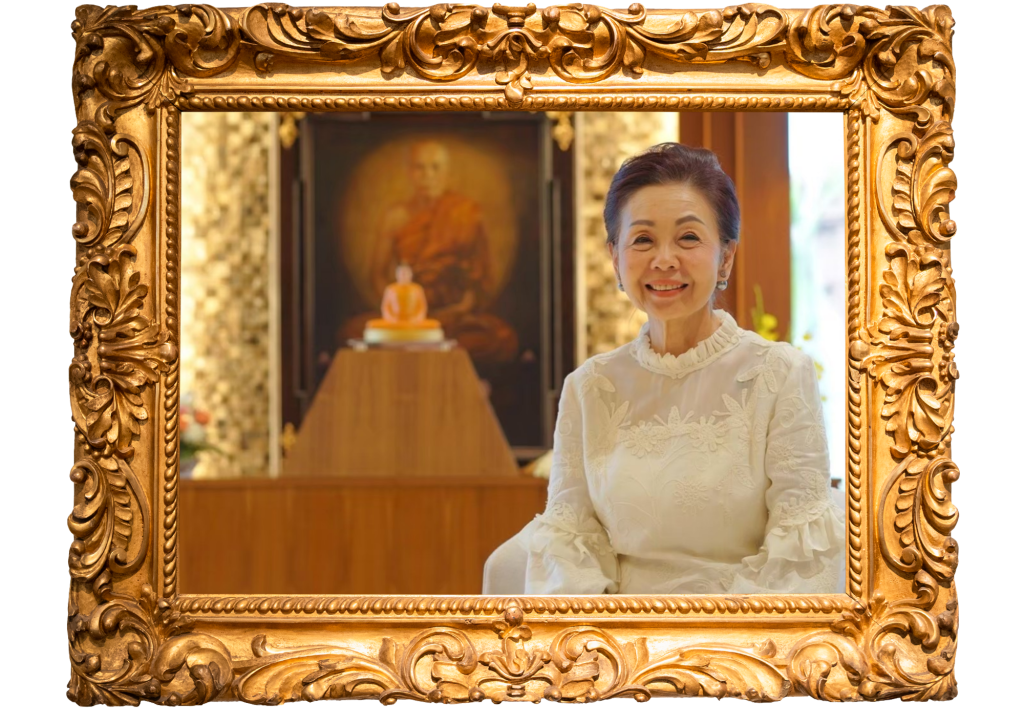
A Personal Welcome
Dear Friends,
If you are reading this, something within you is seeking quiet, clarity, and meaning. I deeply honor that.
The Monk Life Project is more than a program — it is an opportunity to return to yourself. To step away from noise. To rediscover peace that has always been there, waiting beneath the surface.
It takes courage to pause in a fast-moving world. It takes strength to train the mind. And it takes sincerity to seek something deeper than achievement.
May this journey bring you steadiness, insight, and a happiness that comes from within.
With heartfelt support,
Phornsan Kamlang-ek
President, General Arthit – Phornsan Kamlang-ek Foundation
A LIVING PATH OF INNER TRAINING
The Monk Life Project is an immersive 30-day temporary ordination and mindfulness journey designed for modern individuals seeking clarity, healing, and a deeper understanding of life.
Rooted in the ancient Buddhist monastic tradition of Thailand, the project offers a rare opportunity to step out of ordinary life and into a living system that has trained the human mind for more than 2,500 years.
Participants do not merely study Buddhism or meditation.
They live it—through discipline, simplicity, silence, and direct experience.
This is not religious conversion.
It is an invitation to understand the mind from within.
VISION & PURPOSE
Our Vision
To make authentic monastic wisdom accessible to the modern world—
without dilution, commercialisation, or dogma.
We envision a world where individuals, regardless of background or belief,
are equipped with the inner tools to live with clarity, resilience, compassion, and peace.
Our Purpose
The Monk Life Project exists to:
• Offer a true monastic experience in an accessible, English-speaking format
• Provide a safe, structured environment for deep inner training
• Preserve the integrity of traditional Buddhist practice
• Support individuals during pivotal life moments—burnout, grief, confusion, or transition
• Bridge ancient wisdom with modern life challenges
Our purpose is not to promise happiness, but to cultivate understanding—the foundation of lasting peace.
WHY THE PROJECT EXISTS
Modern society excels at training the body, intellect, and career—but often neglects the mind.
As a result, many people experience:
• Chronic stress and anxiety
• Emotional exhaustion and burnout
• Loss of meaning after success
• Grief without space to heal
• A longing for truth beyond material achievement
The Monk Life Project was created to address this imbalance.
Rather than offering quick fixes or surface-level wellness, the project provides conditions for real transformation—through simplicity, discipline, and mindful awareness.
By stepping into monk life, participants temporarily step out of the pressures, identities, and expectations that shape their suffering—and learn how to relate to life differently.
STEWARDSHIP, SUPPORT & A LONG-TERM VISION
The Monk Life Project exists because it is held and supported by a wider ecosystem of care, responsibility, and long-term vision.
The land, monastery construction, facilities, and ongoing operational support are made possible through the General Arthit – Phornsan Kamlang-ek Foundation (GAPKF), under the stewardship of President Phornsan Kamlang-ek.
This support ensures that the project remains:
• Rooted in authentic monastic values
• Free from commercial pressure
• Focused on practice, not profit
• Able to welcome international participants with dignity and care
The registration fee offered by participants contributes to the experience, but it does not cover the full cost of training, accommodation, food, ordination, and guidance. The difference is intentionally subsidised so that sincere individuals are not excluded by financial barriers alone.
This shared responsibility—between participants, benefactors, and the monastic community—allows the Monk Life Project to exist as a living path, not a commercial retreat.
INNER PEACE AS THE FOUNDATION OF WORLD PEACE
At its heart, the Monk Life Project is guided by a simple truth found in the Buddha’s teachings:
World peace begins with inner peace.
The project does not aim to change society through ideology or argument.
It aims to plant seeds of clarity, understanding, and compassion in individuals—knowing that these qualities naturally express themselves outward into families, communities, and cultures.
By drawing from ancient Buddhist wisdom and presenting it in a way that is accessible, grounded, and relatable for international participants, the Monk Life Project serves as a bridge between timeless insight and modern life.
A GROWING SANGHA, A SHARED RESPONSIBILITY
Since its inception, the Monk Life Project has welcomed participants from around the world—each arriving with their own story, and leaving with a quieter, clearer relationship to life.
• 259 participants have already completed the 30-day Monk Life experience
• Our goal is to welcome 1,000 participants through the 30-day program
• From those who feel deeply called, we envision nurturing 100 Monk 4 Life practitioners
These long-term monks are not meant to withdraw permanently from the world.
They are envisioned as carriers of peace—returning to their homelands, cultures, and communities with lived understanding, humility, and the capacity to guide others responsibly.
This is not expansion for its own sake.
It is continuity.
A LIVING LINE, NOT AN INSTITUTION
The Monk Life Project is not building an organisation for recognition or scale.
It is cultivating a living line of practice—one person at a time.
Each participant who trains sincerely becomes part of a quiet ripple:
• From inner steadiness
• To wiser action
• To greater harmony in the world
The work is slow.
The results are subtle.
The impact is enduring.
CLOSING REFLECTION
The Monk Life Project does not promise answers.
It offers conditions.
Conditions for stillness.
Conditions for understanding.
Conditions for peace—beginning within.
And from there, allowing peace to move outward, naturally.
PROGRAM SYLLABUS
1. Meditation
| Topic | Details / Content |
|---|---|
| Nature of the mind | Components of life, body and mind, characteristic of mind, its importance, and how to take care of mind. |
| Middle way meditation | Benefits of meditation, tools for meditation, visualization and mantra, different ways to meditate, and meditation in Buddhism, middle way meditation. |
| 4C Principles in meditation | Consciousness, Comfort, Consistency, and Check. The importance of comfort, comfort of body and mind, balance between consciousness and comfort, importance of consistency and check to improve. |
| Path and bases of mind | 7 bases of mind, moving mind to different bases, importance of center of the body. |
| Obstacles in meditation and how to overcome | Frequent obstacles, ache and pain, wandering mind, tension, and sleepiness, how to deal with each obstacle. |
| 5 hindrances | Sensual desire, ill will, restlessness and agitation, drowsiness and torpor, doubt; their causes, and the ways to prevent and overcome them. |
| Dhamma tutoring and meditation journaling | Benefits of writing a meditation journal, inquiring about practitioners’ experiences and results, answering questions, and offering guidance. This activity takes place every week. |
| Walking meditation | Benefits of walking meditation; the method of walking meditation; practice. |
| Loving-kindness (mettā) and its benefits | The eleven benefits of practicing loving-kindness; the method of radiating loving-kindness; practice after every meditation session. |
2. Dhamma and Vinaya
| Topic | Details / Content |
|---|---|
| Precepts and the Benefits of Precepts | The 5 Precepts, the 8 Precepts, and the 10 Precepts; the importance and benefits of observing the precepts |
| Monastic Discipline (Vinaya) | The teachings of the Fully Enlightened Buddha; the Dhamma and Vinaya; the Saṅgha; the Triple Gem; the purpose of the Vinaya |
| Objectives of Ordination | What ordination is; the importance and benefits of ordination; the goals of ordination for the ordained |
| After Ordination: What to Practice | An overview of monastic training in Buddhism according to the principles of morality (sīla), concentration (samādhi), and wisdom (paññā) |
| The 227 Rules of the Bhikkhu and Offences | The enactment of disciplinary rules for bhikkhus; categories of offences and their remedies; overview and classification of the 227 rules |
| Pārājika | The group of Pārājika offences (4 rules); offences and penalties |
| Saṅghādisesa | The group of Saṅghādisesa rules (13 rules); offences and methods of correction; entering probation |
| Anulomika / Ancillary Topics (Anusāsana) | Four types of moral decline and four types of moral increase |
| Proper Conduct (Sekhiya) | Etiquette and proper conduct for bhikkhus: 4 categories, 75 rules |
| Reflections of a Bhikkhu | Reflection on the use of the four requisites; contemplation on repulsiveness of elements; immediate, past, and frequent reflections of renunciants. |
| Ten Duties of a Bhikkhu | Importance and benefits of the routines of monks; 1. Alms round 2. Sweeping monastery grounds 3. Confession of offences 4. Chanting and meditation 5. Reflection on requisites 6. Attending teachers and preceptors 7. Care of body and possessions 8. Study of Dhamma and Vinaya 9. Attending communal affairs 10. Maintaining conduct worthy of respect |
| Dhammacakkappavattana Sutta | Meaning, origin, importance, overview, and chanting practice. |
| The Four Noble Truths | Detailed explanation of suffering, origin, cessation, and the path. |
| The Noble Eightfold Path | Detailed explanation of the eight factors in theory and practice. |
| The Five Aggregates | Form, feeling, perception, mental formations, and consciousness, all subject to the Three Characteristics. |
| Life of the Buddha | Birth, renunciation, quest for liberation, enlightenment, and proclamation of the teaching. |
| Transmission of Buddhism and Sects | Events after the Buddha’s Parinibbāna, Buddhist councils, dissemination of Buddhism, and different sects. |
| Biography of Phramongkolthepmuni | Birthplace, ordination aspiration, attainment of Dhamma, and propagation of Dhammakāya meditation. |
| Biography of Master Nun | Master Nun Mahāratana Upāsikā Chand Khonnokyung, life background, spiritual turning point, discipleship, continuation of Dhammakāya teachings, and giving birth to Dhammakāya Temple. |
| Biography and Vision of Luang Por Dhammajayo | Youth, meeting with Master Nun, spiritual training, ordination, founding Wat Phra Dhammakaya, and global propagation. |
| Wat Phra Dhammakaya and the World Peace through Inner Peace Project | History, development, branch centers, personnel, and activities under the World Peace through Inner Peace Project. |
| Law of Kamma | Meaning, types, functions, timing, and order of results. |
| Goals of Life | Law of the Three Characteristics, 3 levels of life goals, life goals in this life, future lives, and the ultimate goal. |
| Maṅgala Sutta | Origin and explanation of the thirty-eight blessings. (Taught during the meal time) |
| Sarīraṭṭhadhamma Sutta | Ten things exist because of the body. Cold, heat, hunger, thirst, feces, urine, restraint of body, speech, and livelihood, and the will to live that leads to future lives. |
| Gharāvāsadhamma | Dhamma for householder; Truthfulness, self-discipline, patience, generosity. |
| 10 Bases of Merit (Puññakiriyavatthu) | Meaning, importance, three bases and ten bases of merit. |
| Six Directions for a Good Life | Explanation of the Sigālovāda Sutta. Meaning of 6 directions and how to give respect to the 6 directions. |
| Adaptation and Maintaining the Practice after Disrobing | Continuation of practice, sharing, precepts, and meditation, association with people, how to stay connected with good friends, being the light for your family and people around you. |
3. Communal Living Training
| Topic | Details / Content |
|---|---|
| 5 Universal Goodness | Cleanliness, orderliness, politeness, punctuality, and meditation. Theory and practice. |
| Buddhist Culture | Proper ways of standing, sitting, bowing, and paying respect. |
| Harmonious Living | Discipline, respect, and patience. |
| Sharing Circles | Weekly group meetings for sharing experiences and development. |
| Communal Cultivation Chores | Daily and weekly communal cleaning and shared responsibilities. |
4. Ceremony and Activity
| Topic | Details / Content |
|---|---|
| Orientation | Introduction to living arrangements, distribution of necessities, collection of communication devices, and accommodation assignment (Afternoon of the day before the program starts) |
| Opening Ceremony | Introduction of the project, objectives, teachers, and participants, experience and expectation of participants (1st day of the program) |
| Hair-shaving Ceremony | Hair-cutting, shaving, apology-seeking ritual, and offering of robes and bowl (around the 7th day of the program) |
| Ordination Ceremony | Ordination at the preceptor’s temple (1 day after hair shaving) |
| Teacher–Disciple Commitment Ceremony | Formal commitment to teachers and mentors, who take care of the new monks in place of the preceptors |
| Alms Round | Village alms round practice. All new monks join the alms round the day after ordination. After that each take turn to go each week |
| Eating from the Bowl | Practice mindful eating with proper etiquette |
| Dhamma Pilgrimage | Walking pilgrimage to nearby temple, listen to the teaching of the abbot of the temple (1 day activity) |
| School Visit | Visit nearby school to teach English, activities, dhamma and meditation, and treat lunch for the students and teachers |
| Educational Excursion | Visits to temples and local attractions, including hot springs (1 day activity) |
| Certificate Presentation and Closing Ceremony | Summary, sharing what have been learned and improved, and certificate presentation (On the 29th day) |
| Disrobing and Departure | Disrobing ceremony, cleaning and returning things, and departure (On the 30th day) |
5. Post-training Follow Up
| Item | Details / Content |
|---|---|
| 1 | Participants can join LINE group or WhatsApp group to follow the activities, and to share the knowledge in Dhamma to others. |
| 2 | Participants can learn Dhamma and meditate with teaching monks via online weekly meeting. |
| 3 | Participants can continue the monk life or return to ordain after the program to practice further, which emphasis on meditation and living together as Sangha, and help in the future programs. |